Dental Implants in Chandler, AZ
Dental implants are titanium posts surgically placed in the jawbone to act as artificial tooth roots, holding a crown, bridge, or denture for people missing one or more teeth. At Robert F. Walker Jr. DDS in Chandler, AZ, we place them only when your jaw can support a stable, lasting result.
See the full answer
An implant post is placed into the jaw and left to heal while the surrounding bone grows around it and locks it in place, a process called osseointegration that can take several months, according to the American Dental Association. Once the post is stable, a custom crown, bridge, or denture is attached on top. The American Academy of Periodontology describes two main types, endosteal posts set into the jawbone and subperiosteal frames that rest on the bone for patients without enough bone height, and lists healthy gums and adequate jawbone among the marks of a strong candidate. We confirm those conditions first and suggest bone grafting or another option when they are not met.
Sources: American Dental Association (implants and osseointegration) and American Academy of Periodontology (implant types and candidacy).
If you are missing at least one tooth and want to get replacements, it is likely that you want to get some that look like teeth and will not stand out as being artificial.
No one wants to deal with teeth that are shifting, sliding around, or falling out. Dental implants may be the perfect option for you. If you are considering dental implants, our team at Robert F. Walker Jr. DDS is here to help.
On This Page
What are Dental Implants?
Dental implants are small titanium fixtures that are surgically anchored to the jawbone, giving artificial teeth a stable base to mount onto.
Dental implants are fastened to the jaw by our dental professionals so that replacement teeth can be mounted on top. The goal of the surgery is to anchor the implant to the bone through a process known as osseointegration, so the implant stays firmly in place. That gives our patients the stable support they need while eating and speaking.
Are There Different Types of Implants?
Yes. We offer two main types of dental implants, endosteal and subperiosteal, and which one fits depends on the health, shape, and size of your jawbone.
Our dental team helps you decide which of the two is best for your situation, and we make that call together once we have examined your jaw at the first visit.
What are Endosteal Implants?
Endosteal implants are titanium cylinders or blades placed directly into the jawbone where teeth are missing, and they are the most common type of implant.
We often work with our patients to choose these for their needs. Once the dental implant is in place, we typically allow between four to six weeks for the osseointegration of the implant before we place the abutment into the implant post. While this may seem like a long time to wait, it ensures that the process is done well. You are still able to talk, drink, and eat normally during this time.
What are Subperiosteal Implants?
Subperiosteal implants rest on top of the jawbone, just under the gum tissue, and are an option when there is too much bone loss or poor bone shape for an endosteal implant.
They rely on osseointegration to fasten to the jawbone over time. You will have two procedures done for this kind of implant. During the first one, our team makes an incision close to the area of tooth loss so we can create a mold of the bone, then places sutures to protect that incision until the second part of the procedure, where our staff can place the implant. These implants may take longer, but they allow many people who may have had to go without implants to finally get this procedure.
Dental Implant Placement
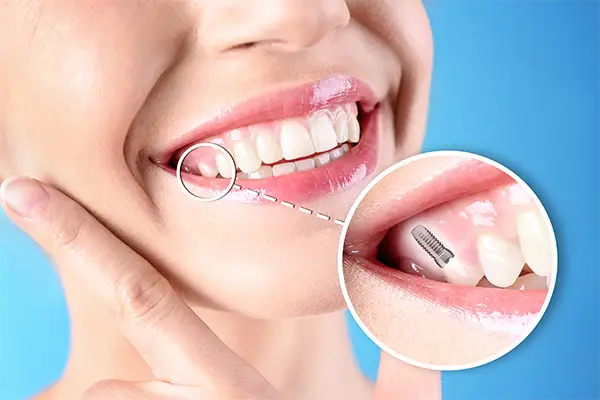 Placing a dental implant restores both the look of a missing tooth and the jawbone stimulation a natural tooth root provides, which helps protect your bone and facial structure over time. Placing a dental implant restores both the look of a missing tooth and the jawbone stimulation a natural tooth root provides, which helps protect your bone and facial structure over time.
Missing a Tooth?
Nothing may be more frustrating than having a missing tooth. Thankfully, modern dentistry provides a way to restore the natural function and appearance of a smile that has been plagued by a missing tooth or teeth. Dental implants give Chandler, AZ patients a reason to smile again!
When a tooth is missing, so is the stability of the bone in the jaw. If the missing tooth isn’t replaced, the bone begins to deteriorate. As this loss of bone progresses, facial features are put at risk and general health is compromised. Dental implants are the only tooth-replacement restoration that halts the bone deterioration process by acting as a direct replacement for the tooth root.
Dental implants have become an extraordinary tooth replacement solution. They provide a solid foundation of support for new, permanent replacement teeth, increasing the ability to eat, speak, and smile with confidence. With the added health benefits, dental implants are an incomparable alternative to tooth replacement.
Your Perfect Solution For Tooth Replacement
For most people missing a tooth, an implant is the closest thing to getting the natural tooth back, replacing both the root below the gum and the visible crown in a few well-defined steps.
Many who have chosen dental implants as their solution to replace a missing tooth have found their experience to be life-changing.
Dental implant placement has become a routine process. Here is how an implant is placed: Placing the Roots
First, a titanium implant is placed in the jawbone by an oral surgeon and left to heal.
Adding the Restoration
Once this fusion is complete, an abutment will be placed on the implant, and Dr. Walker will attach a natural-looking crown that becomes the new tooth.
Integrating With the Jaw
As it heals, the implant and jawbone begin to fuse and become one, creating a solid foundation for your replacement tooth.
Outstanding Outcomes
The end result is a sturdy tooth that looks as natural as your real tooth.
How We Can Help
If you are missing teeth, a dental implant is one of the most natural ways to restore your smile, and the first step is a consultation to confirm it is right for you.
When you are missing teeth, having a dental implant is a great way to naturally restore your smile and make it look as good as new. Our team at Robert F. Walker Jr. DDS are happy to discuss this option and see if it is the right fit for your oral health needs. Contact us today at (480) 786-4000. Our office is at 1120 South Dobson Rd., Suite 105, Chandler, AZ 85286.
Frequently Asked Questions
How long does the dental implant process take?
The full process usually spans a few months, because the implant post needs time to fuse with the jawbone before the final tooth goes on. After placement, the bone grows around the implant in a process called osseointegration, which can take from a few weeks up to several months depending on your healing and the type of implant. You are able to eat, drink, and speak normally during this time. We give you a clear timeline at your consultation, and cases that need a bone graft first may run a bit longer.
Does getting a dental implant hurt?
Implant placement is done with local anesthesia, so you should not feel pain during the surgery itself, and most people manage the recovery with over-the-counter pain relief. Some soreness, swelling, or bruising for a few days afterward is normal, and a short stretch of soft foods helps while the area settles. If discomfort lasts beyond a couple of weeks or gets worse rather than better, let us know, since that can signal an issue worth checking.
Am I a good candidate for dental implants?
Good candidates are generally in good overall and oral health, have healthy gums free of active disease, and have enough jawbone to support the implant. Those are the criteria the American Academy of Periodontology lists for implant candidacy. If you have lost bone in the jaw, you may still qualify after a bone graft, or with a subperiosteal implant that rests on the bone. We assess all of this at your first exam and tell you honestly whether implants or another option fits your situation.
What is the difference between endosteal and subperiosteal implants?
Endosteal implants are placed directly into the jawbone and are by far the most common type, while subperiosteal implants sit on top of the bone, under the gum, with posts that hold the replacement teeth. The American Academy of Periodontology notes that subperiosteal implants are generally used for patients who cannot wear conventional dentures and do not have adequate bone height for an endosteal implant. We help you choose based on the shape and health of your jaw.
How do I take care of dental implants?
You care for dental implants much like natural teeth, with twice-daily brushing, daily flossing, and regular dental checkups. The implant itself cannot decay, but the gum and bone around it can still develop peri-implant disease if plaque is allowed to build up, so consistent home care matters. We schedule periodic follow-ups to monitor the implant, the surrounding tissue, and your bite so small issues are caught early.
Will a dental implant look and feel like a real tooth?
Yes, a dental implant is built to look and feel like a natural tooth, since the crown attached to it is custom made to match the size, shape, and color of your surrounding teeth. Because the implant is anchored in the jawbone, it stays put while you eat and speak, without the shifting or slipping that can come with removable options. That stability and natural appearance are among the main reasons patients choose implants over bridges or dentures.
Can a dental implant prevent bone loss in the jaw?
An implant replaces the missing tooth root and passes normal chewing forces into the jaw, which helps maintain the bone that otherwise tends to shrink after a tooth is lost. Unlike a removable denture or a traditional bridge, an implant sits in the bone rather than on top of the gum, so it supports the jaw in a way those options do not. Preserving that bone also helps protect the neighboring teeth and your facial structure over the long term.
Are dental implants better than dentures or a bridge?
Implants are a fixed, standalone replacement that does not rely on neighboring teeth or adhesives, which makes them more stable than dentures and more conservative than a traditional bridge that requires reshaping the adjacent teeth. That said, dentures and bridges still have their place depending on your bone, your health, and your budget. We walk through the trade-offs at your consultation so you can pick the option that fits your mouth and your goals.
Clinical References
The information on this page reflects established standards of care and authoritative patient guidance on dental implants. Primary sources:
Dental implant care at Robert F. Walker Jr. DDS is provided by Dr. Robert F. Walker Jr., DDS, a general dentist in Chandler, AZ who has practiced since 1997 and holds Fellowships in the Academy of General Dentistry and the Las Vegas Institute of Advanced Dental Studies.
Areas We Love to Serve!
We place dental implants for patients across the greater Chandler area, including the nearby communities below.
|